
 Affiliate Marketing Compliance
 Brand Protection
 Social Media Monitoring
 Sub-affiliate Transparency
 Marketing Intelligence
 PPC Monitoring


 by Shenaly Amin | 15 Jan 2026
 3-min read
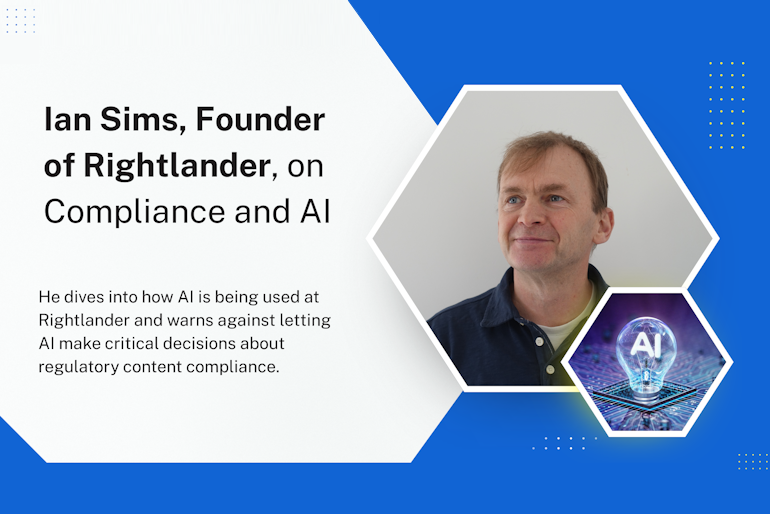
At Rightlander, we regularly field questions about AI and how it can help reduce the compliance workload, so I thought I'd start 2026 off by providing a quick summary of how Rightlander is using AI to improve our compliance product.
It's an exciting subject and one that is already impacting what you see. I also touch on the pitfalls of letting AI make complex decisions about content when there are regulatory implications involved.
AI is nothing new to Rightlander: our tech has been using machine learning techniques for several years to prioritise compliance risks and to learn from client actions taken in the compliance workbench... but AI is evolving quickly.
We have a dedicated AI Analyst role in the business, and we have been evaluating how AI can make a positive impact.
Here are my responses to the 4 most common questions that we field regarding Rightlander's use of AI in compliance tasks:
Q1. Can Rightlander use AI to make the compliance decisions for us?
Can we? Yes. Will we? No. I appreciate that if your role makes you "accountable" for affiliate compliance, this is probably good news, whereas if your role makes you "responsible" for affiliate compliance, you may have just let out a sigh!
But the reality is that doing this would carry a significant risk with big consequences. For example, regulations around gambling advertising are both unique and fluid and many of the rules that come and go are not fully defined and therefore very open to interpretation.
Unsurprisingly, we can see from Rightlander client interactions over the past 8 years that many individuals interpret the same "issue" in different ways.
While AI can help us to learn from each individual's behaviour, adopting one interpretation of a potential compliance issue as a de-facto decision can have damaging consequences, not least because advertising rules can get stricter and social/political attitudes towards gambling frequently shift. What seems fine now may be far from fine in a few months' time!
Q2. Does AI identify issues more effectively?
Yes. AI can be very helpful for content analysis, although that is reliant on the AI prompts being engineered well enough to be able to get the right balance between surfacing too much irrelevant data and not missing something important.
This is something that complements our traditional pattern-matching techniques for extra robustness.
Q3. Do you use AI to find web pages and social posts?
No. Rightlander retrieves, crawls and scrapes over 1 million pages and social posts every day and there are faster, better, more reliable, and cost-effective methods than AI for those tasks.
Q4. How is Rightlander using AI to save us time?
Our research shows that AI is very good at contextualising results. We will soon be implementing this in the compliance workbench to help users remediate more issues with minimal analysis.
Additionally, the machine learning techniques that we have deployed for several years also have access to the history you have built - and continue to build - and are prioritising issues based on these decisions where appropriate.
In Summary
AI is beginning to improve compliance scanning, saving everyone time and adding an extra layer of protection but it would be very dangerous to rely on it to make decisions that are critical to your business.
Please feel free to contact your Rightlander Account Manager with any other AI-related questions that you may have.


